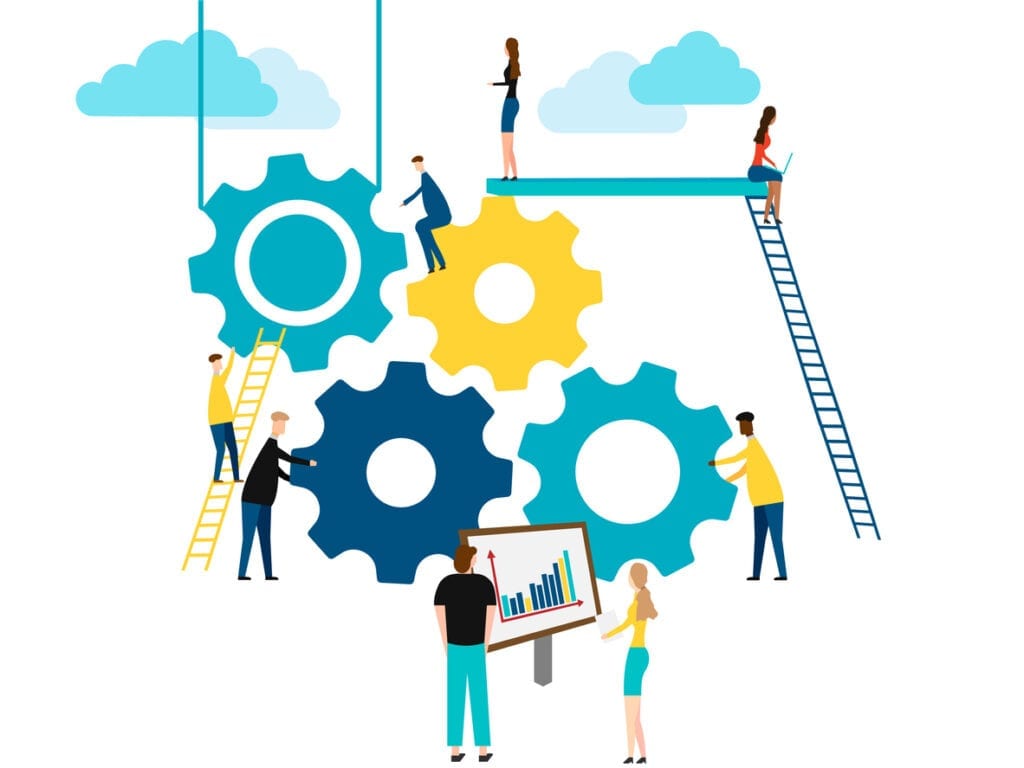
Capacity building refers to intentional and sustained efforts designed to improve how an organization functions. Pretty important, right?
Yet, capacity building is often overlooked by leaders as they focus on the services, products or programs that drive the revenue and growth for the organization.
Then Covid-19 happened and it did a mighty good job of illuminating capacity challenges as sales and programs stalled or, in some cases, as need outpaced an organization's ability to deliver.
In short, organizations have been forced to look at capacity in order to survive.
Here's what you need to know about capacity building to ensure you're prepared for challenges:
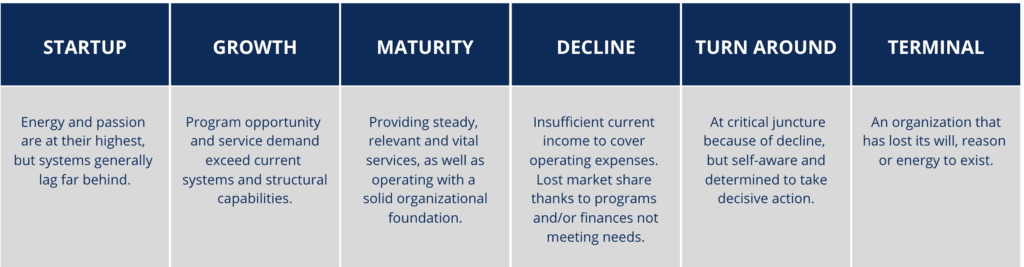
It's important to align capacity building efforts to the lifecycle stage of your organization because as an organization moves through various stages, its capacity needs change. This overview will help you understand the typical organizational mindset at each stage in its lifecycle:
Once you've identified your organization's stage in the lifecycle and considered the mindset typically at play, look at capacity building in these four areas through that lens:
Because no organization can work on everything at once, I recommend that my clients prioritize. Here’s how:
STARTUP: For startup organizations, capacity building related to management and governance are key. The leader is the spark that keeps the organization alive at this early stage, and a board is critical to spreading the word, making connections and helping with funding.
GROWTH: In the growth stage, governance is still relevant but capacity building efforts also need to start to focus more on financial resources and administrative systems. The board becomes more formalized, financial resources grow and diversify and administrative systems need to be robust to support growth and complexity.
MATURITY: The mature organization is in second- or third-generation leadership, and these leaders bring new skills and vision. So, at this stage of an organization's lifecycle, capacity building in the management arena becomes important again. In a mature organization, financial resources are more diversified and administrative systems are well established which increases organizational stability. This frees you up to focus on other areas.
DECLINE: Organizational decline occurs when programs and/or services lose their relevancy. Often slippage goes unseen because the organization simply continues to chug along. Financially, the organization may carry significant fixed costs or have expenses that don’t reflect the current reality — and, at this stage, systems may be antiquated. This means it's time to once again focus capacity building efforts on financial resources and administrative systems.
TURNAROUND: Entering the turnaround stage indicates new leadership is required. Specifically, leaders who can shape a clear direction and guide the organization there with confidence. It is also very helpful to have a core group of committed board members to be champions for the organization within the community. There must be a commitment to be honest and frank about the organization’s standing and the need to rebuild. Capacity efforts will be strongly focused on management and financial resources first, followed by governance and administrative systems as planned changes are implemented.
Understanding capacity building at each stage of the organizational lifecycle provides you with a solid starting point for measuring, investing and building.
Lifecycle thinking also gives you a vocabulary for understanding and talking about where your organization is currently, and helps put challenges in perspective.
Finally, it provides a framework through which you can more easily discuss capacity gaps and what's needed to make progress with your stakeholders.
While 2020 may have put capacity building in the spotlight, it really should be an ongoing priority. In good times and in uncertain times, maintaining a focus on capacity building will only help you better guide your organization forward.