Nothing speaks more to the resiliency of business leaders than their ability to think about investing in the growth of their organizations when the near future is so full of uncertainty.
I happen to have proof that there are, in fact, plenty of resilient leaders out there because whether to save cash or invest it is one of the most frequent questions I'm getting from my clients right now — and resiliency is an attribute that has the power to separate an organization from the rest of the pack.
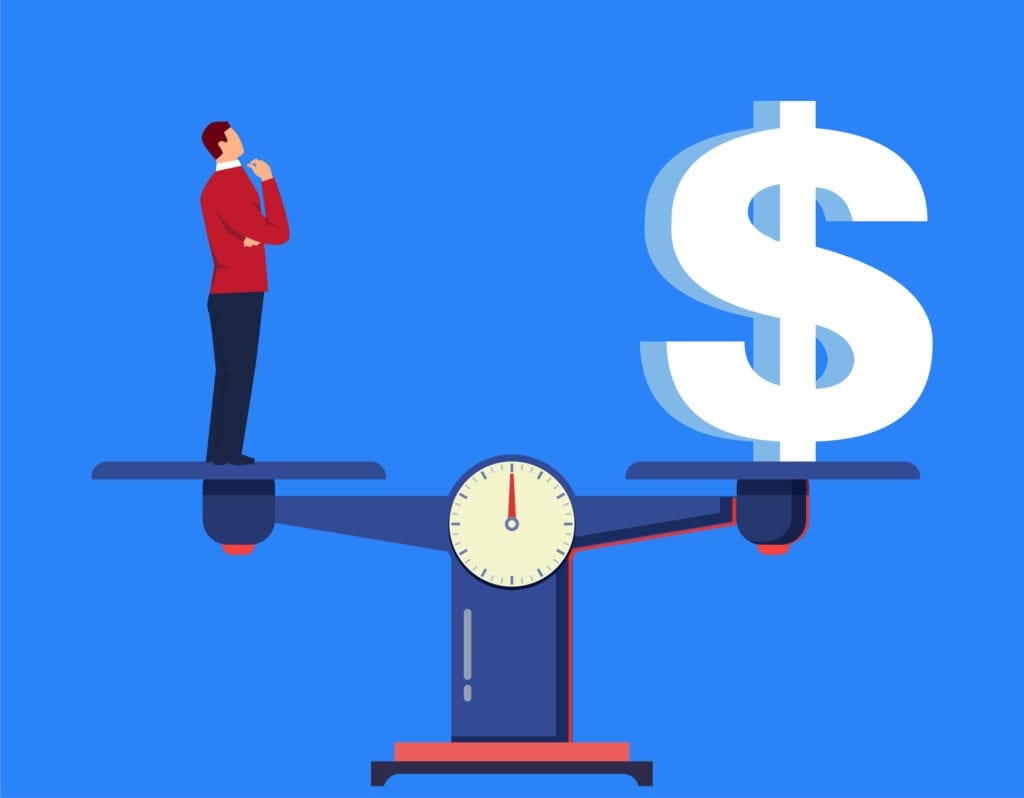
The question boils down to what are the factors leaders should consider this year to find the right balance between creating a reserve versus making investments to protect and position your organization during 2021.
It’s a tough question.
All the data indicates that this will be another difficult year for many organizations, and conventional wisdom suggests building up your cash reserves to weather the storm.
However, squirreling away too much cash is a big risk too. It can result in anemic growth and missed opportunities. So, if your posture is too defensive, you can lose momentum and relevance — fast. What a dilemma!
How do you decide how much to save and how much to invest for your organization? Fortunately, there's a smart and proactive way to figure it out. That is if you're one of those leaders who's brave and resilient enough to ask the question and not simply follow the sheep down the conventional path.
Staff Costs. For most organizations, people are the most critical and valuable asset. These uncertain times require a team of top players and losing key people now can be damaging and costly for your organization. Make sure your organization has enough cash reserves to cover their salaries and benefits, and thus provide them with security, for the long term in order to retain them.
Fixed Critical Expenses. There are some expenses which can’t be cut or reduced without having a serious negative impact. Identify those expenses and build a cushion to cover them in order to avoid disruption to your organization.
Access to Outside Funds. If you have a line of credit or outside investment, you might not need to maintain a big cushion. Analyze your sources of cash and use models to project cash needs and flows. Applying for loans or lines of credit is much easier when your organization is healthy.
Reinvestment Opportunities: Organizations sometimes save money at the expense of reinvesting in things that would actually make it more sustainable and scalable. Perhaps technology is antiquated or career development and training for the team isn't happening. Failing to recognize and commit to reinvesting in your organization can have serious consequences. As a leader, you need to balance saving with investing in your assets so they retain their value and create a strong foundation for further growth.
New Investments: There may be programs, services and/or operations that present areas of growth for scaling for your organization. One of my clients had the opportunity to scale by bringing its programs into a new geographic region because a competitor had left the area. Another client acquired a team and product from a business owner who wanted to sell their business. Both clients recognized that an investment was needed to take advantage of these opportunities in service of growth and they each made that investment.
Risk Tolerance: Every leader and organization has a unique risk profile. If keeping your cash reserves lean means you’re awake at 4 am every morning staring at the ceiling, you probably need to save more. If you’re too stressed out to recognize potential and lead, you’re not doing anyone any good. Finding the right balance between saving and investing requires a combination of logical thinking and emotional security. Run the numbers, check your gut and settle on an approach.
In answering the "save versus invest" question, remember your cash reserves and investment numbers aren't set in stone. As your organization evolves and the market changes, revisit the above considerations and your calculations and make adjustments. The only thing that needs to be set in stone is your commitment to nurturing your resiliency as a leader so that you have the courage to not simply numb out and take the default path during uncertain times — that you have the ability to question and act.